









Android Apps That Perform.
We partner with you to build native Android applications using Kotlin and Jetpack Compose—modern, performant apps that work beautifully across the Android ecosystem. Our team specializes in Kotlin-first development, delivering apps that handle the realities of Android fragmentation while following Material Design guidelines. Whether you need a consumer app reaching billions of Android users or an enterprise solution with custom hardware integration, we build it right.
Why Native Android Is a Strategic Advantage
Android powers over 70% of mobile devices worldwide. When your product needs to reach the broadest possible audience with the best possible experience, native Android development gives you capabilities that cross-platform frameworks cannot match.
Kotlin-First Performance
Kotlin is Google's preferred language for Android development, and Jetpack Compose is the modern UI toolkit. Native apps compile directly to bytecode optimized for the Android runtime—delivering faster launch times, smoother scrolling, and better battery life than bridged frameworks.
Full Platform Access
Background services, foreground notifications, Bluetooth stacks, NFC, custom hardware integration—native Android gives you direct access to every platform API. No waiting for third-party plugin support or working around framework limitations.
Fragmentation Expertise
Android runs on thousands of device configurations. We build apps that perform consistently across budget phones, flagship tablets, foldables, and everything in between. Our architecture handles version differences and manufacturer quirks so your users get a reliable experience.
Material Design Done Right
Material Design 3 with dynamic color theming, adaptive layouts, and Android-specific interaction patterns. Your app feels like it belongs on Android rather than a ported iOS app—which Android users notice and appreciate.
Google Play Ecosystem
In-app purchases, subscriptions, staged rollouts, Play Store listing optimization, and Managed Google Play for enterprise—we know the Google Play ecosystem inside and out and help you maximize your distribution strategy.
Modern Architecture
We follow Android architecture best practices—MVVM with Jetpack components, Hilt for dependency injection, Coroutines and Flow for async operations. The result is a codebase that is testable, maintainable, and easy for your team to extend.

What We Deliver
Our Android team specializes in Kotlin-first development with Jetpack Compose, delivering apps that follow Material Design guidelines while handling the realities of Android fragmentation. We build apps that perform consistently across thousands of device configurations—from budget phones to flagship tablets.
Android in Action
We have delivered native Android applications across consumer products, real estate, healthcare, and more—including work with Procter & Gamble and other partners beyond what we can share publicly.

Jungle Jim's App: Search, Maps, and Deals for 180,000+ Items
We overhauled the Jungle Jim's iOS and Android apps with product search, interactive store maps, and app-exclusive deals — plus an internal employee app to streamline staff workflows.

ArtsWave: Cincinnati's Arts Events App with Exclusive Passes
We designed and built ArtsWave's iOS and Android apps from concept to launch — a searchable events calendar, behind-the-scenes content, and the ArtsWave Pass for free and last-minute access to Cincinnati concerts, shows, and exhibitions.

sleepme App: AI Temperature Control, Guided Meditation, and Sleep Analytics
We joined sleepme's team to add AI-driven temperature control, guided meditation, sleep analytics, and smart scheduling to their iOS and Android app — including IoT integration with their sleep hardware.

Kroger Partnership: Two Apps, Millions of Weekly Users
How our ongoing partnership with America's largest grocer built the Ruler Foods shopping app and OptUp — a personalized nutrition tool used by millions every week.

P&G Partnership: From IoT Toothbrushes to AI Skincare
We help P&G turn R&D breakthroughs into consumer apps — Oral-B's AI brushing coach with 3D teeth tracking and Setlist Beauty's AI skincare platform.

Sporty's: E6B Flight Computer, 30+ Courses, and 14 Years of Partnership
Since 2011, we've helped Sporty's build the definitive E6B flight computer app, a 30+ course pilot training platform with HD video and FAA test prep, and Takeoff for bite-sized aviation learning — across iOS, Android, Apple Watch, and Apple TV.
Beyond the Phone: Android Everywhere
Android is not just phones. Our native expertise extends across form factors—and we build experiences optimized for each one rather than one-size-fits-all layouts.
Phones
The foundation of Android development. We build apps that handle the full range of Android phones—from compact devices to large-screen flagships—with responsive layouts, adaptive navigation, and performance tuning for diverse hardware.
Tablets & Foldables
Multi-pane layouts, drag and drop, stylus support, and adaptive UI that transforms gracefully between folded and unfolded states. We build apps that take full advantage of larger screens rather than just stretching the phone layout.
Wear OS
Smartwatch apps optimized for glanceable interactions—health tracking, notifications, complications, and tiles. We build companion apps that extend your phone app to the wrist, or standalone experiences for Wear OS.
Android TV
Living room experiences built for the lean-back interface. We develop Android TV apps with Leanback navigation, voice search integration, and media playback optimized for large screens.
Automotive
Android Auto and Android Automotive OS apps for in-vehicle experiences. We follow Google's driver safety guidelines while delivering useful functionality for navigation, media, and communication.
Widgets & Quick Settings
Glanceable home screen widgets with Glance (Jetpack Compose for widgets) and Quick Settings tiles that extend your app beyond its icon—giving users fast access to key functionality.
Android Insights from Our Team
Our engineers share practical Android knowledge from real-world projects. Deep dives into Kotlin, Jetpack Compose, architecture patterns, and platform integration.

On-Device OCR on Android with ML Kit Text Recognition v2 and CameraX
A step-by-step guide to building a real-time VIN scanner using ML Kit Text Recognition v2, CameraX, and Jetpack Compose. Includes the full POC repo, backpressure strategy for live scanning, and VIN validation with check-digit verification.

Prompt Injection on Gemini Nano: How We Stopped It
We attacked Gemini Nano with prompt injection — it worked. The model's safety training made it too trusting. Here's our defense-in-depth approach to hardening on-device AI.

Fixing Gemini Nano's Accuracy with a Bigger Model
Nano misclassified foods and was case-sensitive. We used Gemini Pro to rewrite the prompt — with prefix caching, inference hit 1.0s. Results inside.

AI Agents Migrated Our Nav 2 to Nav 3 Code - Free vs Paid Compared
We gave Gemini and Claude Code the same Navigation 3 migration task. Both produced eerily similar code, and both hallucinated library versions. Only one ran autonomously.

Building an On-Device AI App with Gemini Nano in Kotlin
We classified pantry items on-device with the ML Kit GenAI Prompt API — zero cloud costs, offline support. Structured JSON output ran in 1.36s vs 5.9s for freeform. Full Kotlin source and device compatibility list.
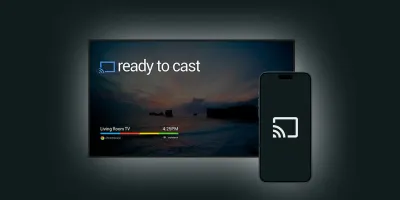
Adding Chromecast Support to Your Android App with ExoPlayer
Want to cast content from your Android app to the big screen? This tutorial shows how to add Chromecast support using ExoPlayer, from setup to implementation.
Android Development Questions, Answered
Choosing between native Android and cross-platform is a significant technology decision. Here are answers to the questions CTOs, technical co-founders, and engineering leaders ask us most often about Android development.