






The Breaking of Habits: Sister Mary Kenneth Keller

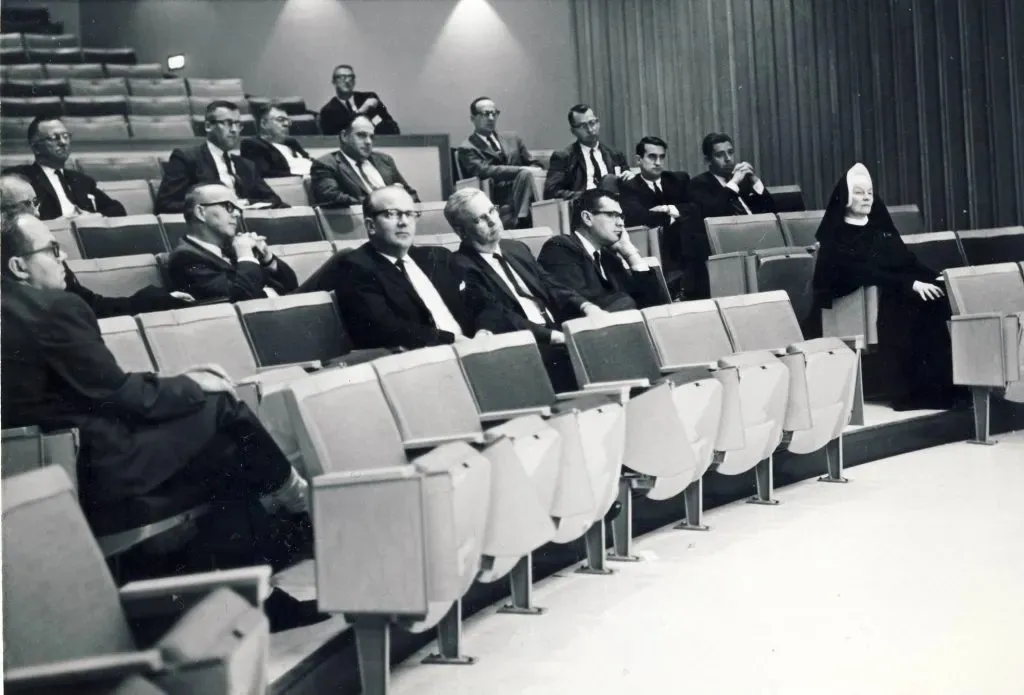
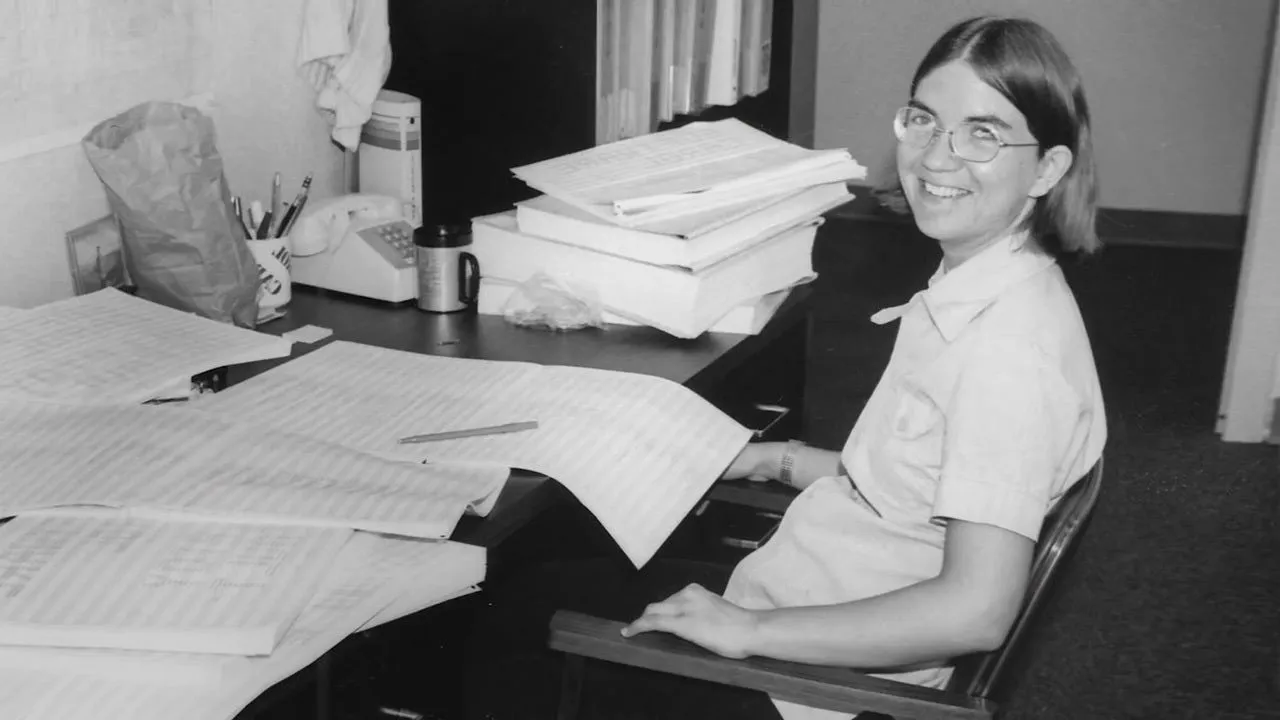
Having been educated in Catholic schools from kindergarten through high school, I developed a rather defined (yet unknowingly limited) view of Roman Catholic nuns. I have nostalgic memories of sweet elderly women in religious habits reading us picture books and providing the cookies for the cafeteria. Even as I grew into adulthood, my view was hardly skewed by more radical nun characters. As far as I was concerned, nuns were generous old women who didn’t do much besides pray, read, and bake cookies. While researching women in tech for Women’s History Month, I stumbled upon an unlikely figure — Sister Mary Kenneth Keller.
Mary Kenneth Keller was born in Cleveland, OH in 1913. At the age of 27, she felt the call to the Catholic sisterhood and took her vows with the Sisters of Charity of the Blessed Virgin in 1940. However, the call to the religious life was not the only call Sister Mary would receive in her lifetime. She was fascinated by math and science, which drew her to attend DePaul University in Chicago to receive her B.S in Mathematics and eventually M.S. in Mathematics and Physics.
Yet another call led Sister Mary to Dartmouth College, which in the 1950s was a male-only institution. That fact didn’t persuade her from teaming up with computer scientists John G. Kemeny and Thomas E. Kurtz to develop BASIC, a computer programming language. BASIC revolutionized custom software creation by making it accessible to those who weren’t scientists or mathematicians.
After years of continuous learning and exploration, Sister Mary obtained a Ph.D. in Computer Science from the University of Wisconsin. She was the first woman in the United States to do so.
Sister Mary would go on to found the computer science department at Clarke College — an all-female establishment until 1979. During her 20 years as the department chair, she strongly advocated for women in computer science.
It’s clear that Sister Mary Kenneth Keller reached for the heavens when it came to breaking the stigma against women in computer science. While I may not be a software engineer myself, I’m proud to work amongst women engineers who were paved the way by such an incredible woman.